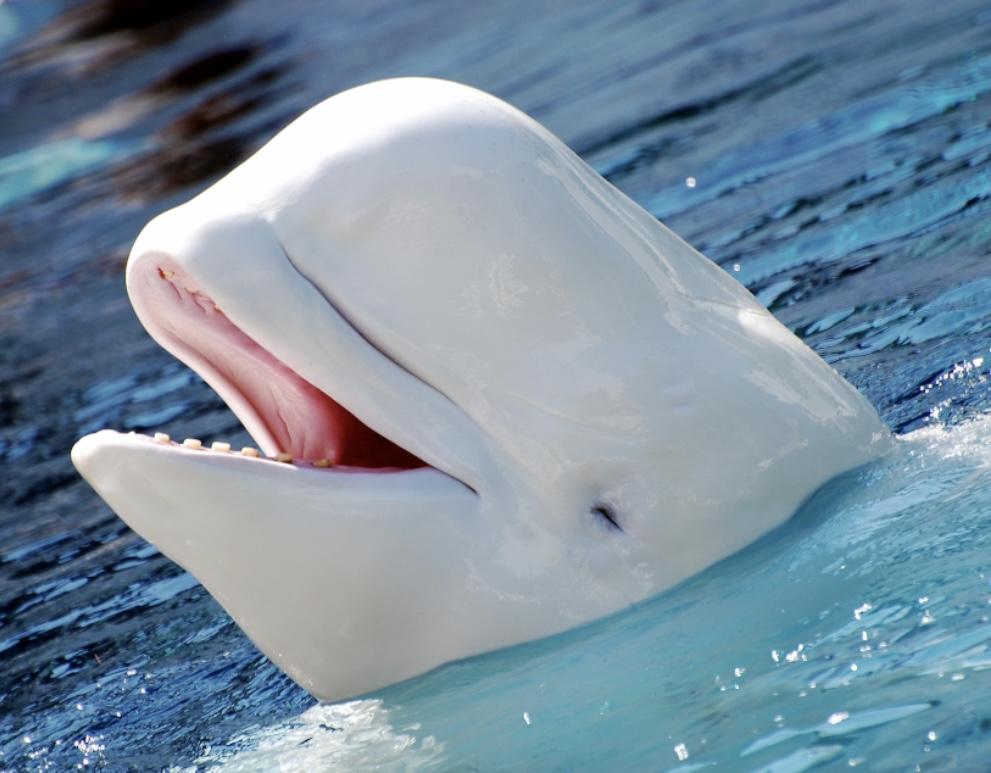
In December 2023, SeaWorld San Diego announced the passing of Ferdinand, a male beluga whale who had lived in human care for nearly five decades. His story is a reminder of the complex and often heartbreaking realities faced by marine mammals kept in captivity. PETA+1 (https://www.peta.org/wp-content/uploads/2021/12/seaworldfactsheet.pdf?utm_source=chatgpt.com)
🌊 From Hudson Bay to Sunny San Diego
Ferdinand was captured from the icy waters of Hudson Bay, Canada, in 1975 when he was an estimated 6 years old — a young age for a whale taken from its family and pod. At that time, capturing wild whales for display at aquariums and marine parks was widespread, and SeaWorld was among the organizations that brought such animals into captivity. captivecetaceans.fandom.com (https://captivecetaceans.fandom.com/wiki/Ferdinand_%28SWC%29?utm_source=chatgpt.com)
After years at a zoo in Germany, Ferdinand was moved to SeaWorld San Diego in 2004, where he spent the rest of his life. For over 19 years, he swam in tanks rather than oceans, often serving as an ambassador — in photos, exhibits, and educational displays — for his species. captivebelugas.fandom.com (https://captivebelugas.fandom.com/wiki/Ferdinand?utm_source=chatgpt.com)
🐬 A Long Life, But Under Human Care
Ferdinand lived to be about 53 years old, which is notably old for a beluga in captivity. SeaWorld acknowledged his passing with gratitude for his personality and the education he provided to visitors. PETA (https://www.peta.org/wp-content/uploads/2021/12/seaworldfactsheet.pdf?utm_source=chatgpt.com)
But age and longevity tell only part of the story. Wild beluga whales form strong social bonds, travel vast distances with their pods, navigate ice and open ocean, and pursue dynamic food sources — behaviors impossible to fully replicate in tanks. Their lives in artificial environments differ profoundly from those of free-roaming whales in the Arctic waters where they belong.
🐋 What Ferdinand’s Story Teaches Us
Ferdinand’s life in captivity reflects both human fascination with whales and the ethical questions that surround keeping large, intelligent animals in artificial settings:
• Social needs: Wild belugas live in tight-knit family groups and communicate constantly through a rich soundscape. Captive environments can’t fully support such complex social dynamics.
• Space and movement: Belugas are built for long-distance swimming in open waters. Tanks, no matter how large, are a fraction of the space they would travel daily in nature.
• Conservation messaging: While parks present captive animals as educational ambassadors, there is ongoing debate over whether such displays truly foster conservation or instead normalize captivity.
🌍 Beyond Captivity: Thinking of Wild Whales
Beluga whales in the wild are resilient, curious, and adapted to some of the harshest ocean environments on Earth. Their populations face challenges — from climate change to noise pollution — that captivity stories like Ferdinand’s help bring into public view. They are reminders of what we stand to lose if oceans and marine ecosystems aren’t protected.
Ferdinand is gone, but by sharing his story, we can reflect on the ways humans interact with whales, and what true respect and care for these remarkable creatures might look like — whether through protecting their habitats, supporting research, or advocating for fewer animals held in confinement.