How Fishing Gear Harms Whales — and How Vegan Choices Help Protect the Ocean
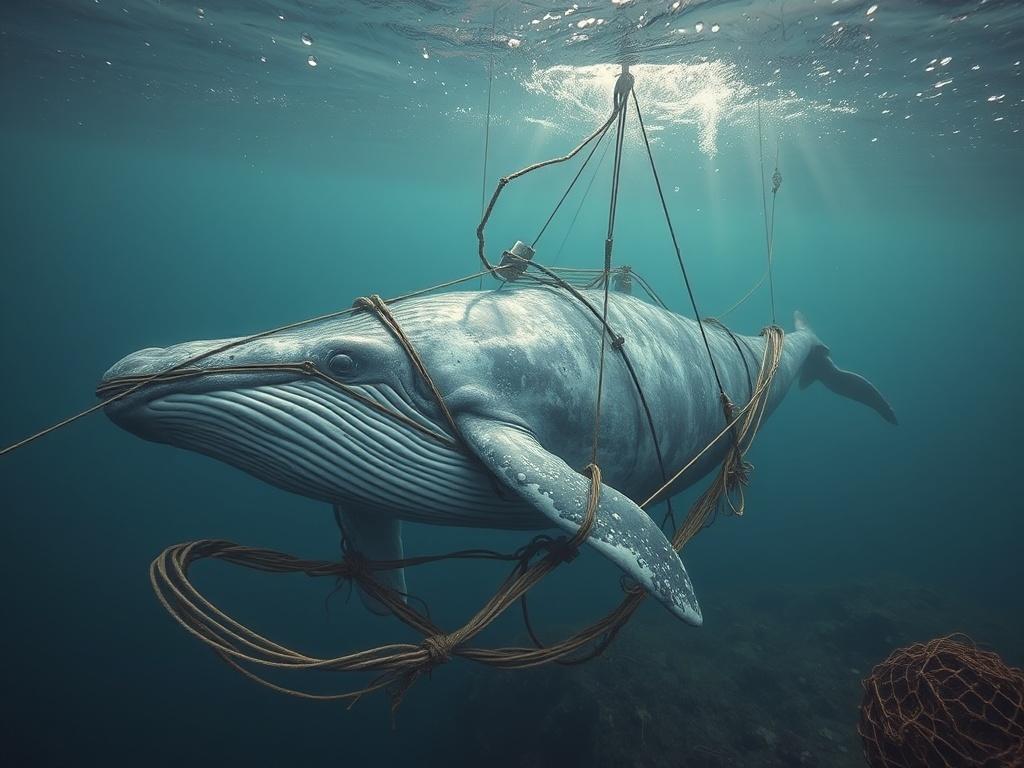
Fishing gear is one of the biggest threats whales face today. Lost or discarded equipment—often called ghost gear—including nets, lines, and traps can drift through the ocean for years. Whales become entangled in this gear, which can cut into their skin, restrict movement, cause severe injuries, prevent them from feeding, and often lead to slow, painful deaths. Even when whales escape, the injuries can result in infections, reduced mobility, and lowered chances of survival and reproduction.
Beyond entanglement, fishing gear contributes heavily to ocean pollution and ecosystem destruction. Industrial fishing disrupts food webs, depletes fish populations whales depend on, and damages habitats like seafloors and coral systems. The result is an ocean that is louder, emptier, and more dangerous for whales and other marine life.
One powerful way individuals can help reduce this harm is by choosing vegan alternatives. By avoiding fish and other animal products, demand for industrial fishing decreases—meaning fewer nets, lines, and traps in the ocean. Plant-based foods such as beans, lentils, tofu, tempeh, seitan, grains, vegetables, fruits, nuts, and seeds provide abundant nutrition without harming marine life. Vegan alternatives to seafood, like plant-based “fish” fillets, crab cakes, and tuna-style products, allow people to enjoy familiar flavors while keeping whales safe.
Protecting whales means addressing the systems that harm them. Reducing reliance on fishing, supporting vegan options, and advocating for ocean-friendly policies all help move us toward a future where whales can live free from entanglement, suffering, and exploitation. Every choice matters—and choosing compassion helps keep the ocean wild and alive. 🌊🐋